

Trauma & Attachment Therapy for Women in San Antonio
Helping women move through unresolved trauma, relationships that leave them questioning themselves, and the losses and changes in their life.
For women carrying what never fully left.
Therapy for sexual trauma, reproductive and birth trauma, developmental and childhood trauma, grief, anxiety, attachment wounds, and the nervous-system patterns that still shape how you move through your life, your body, and your relationships.
Rebecca Flores, LPC works with women carrying reproductive, birth and labor trauma, developmental and childhood trauma, sexual trauma, grief, anxiety, attachment wounds, and the body-based patterns that can remain long after life looks functional on the outside.
Focused Trauma Work
For women who want therapy that goes beneath insight alone and works with the body, nervous system, memory, and relational patterns underneath what still hurts.

EMDR Intensives
Focused trauma processing for women who want more depth, time, and continuity than a weekly sessiono allows.

Developmental & Childhood Trauma Therapy
Therapy for early emotional wounds and pain, neglect, parentification, inconsistency, and the patterns that formed before you had language for them.

Reproductive, Birth & Labor Trauma Therapy
Therapy for traumatic birth, pregnancy loss, fertility trauma, NICU experiences, reproductive medical trauma, and the body’s memory of what happened.

Sexual Trauma Therapy
Therapy for women carrying sexual trauma, shame, body disconnection, fear, grief, or intimacy wounds.
Attachment Therapy
Work with closeness, protection, over-attunement, people-pleasing, fear of needing, and the relational patterns that keep repeating.
Anxiety & The Nervous System
For persistent alarm, hypervigilance, overthinking, body tension, and the nervous system’s search for safety.
Grief & Loss
Therapy for grief that has not had enough room, including traumatic loss, reproductive loss, relational grief, and unfinished mourning.
The Weight You Carry

You know something in you hasn't come back fully.
You feel it in the moments joy doesn’t quite land. In the chest tightening before you know why. In the memory that finds you before you find it. In how often your body knows you’ve said yes too quickly before your mind catches up.
In how someone’s disappointment can still knock the floor out from under you. In the criticism you absorb before you’ve even decided if it’s true. In the silence after you let yourself need something, and wish you could take it back.
Your calendar is full. People rely on you, and you come through.
You care about what matters. About people who aren’t always protected. About what isn’t right in the world. None of it has ever had to ask you twice.
And underneath all of it, something still hurts.
You’ve kept going. Carrying what happened long after you stopped talking about it.
The early learning that your needs were negotiable. That wanting things was safer done quietly, if at all. Trauma your body remembers in ways your mind has tried to move past.
The mind learns to over-function. The body keeps watch.
And you’re tired of living your one good life as a slightly smaller version of yourself.

What Gets to Be Here
There is no clinical waiting room here.
The transition is soft, the pace is unhurried, and the clock doesn’t dictate the depth. It’s a space where the world’s noise drops away, leaving only the room needed for you to finally be met.
When things get dark, the room doesn’t flinch. It gets comfortable enough to stay there.
The thing you almost move past because it feels too messy, too much, or too hard to explain, that gets noticed here.
And here, that doesn’t have to be edited out.
The grief that never had closure. The shame that leaks out sideways. The anger that doesn't look polished. The parts of you still waiting to be met.
Your composure won't be mistaken for resolution.
Your vulnerability won't be mistaken for fragility.
How articulately you think, describe your pain, or name what you're feeling, that won't be where we stop. It's the place we start from.
When something moves underneath the surface of what you're saying, it gets noticed. When you're about to move past something that matters, the invitation is: stay there a moment.
There is warmth in this room, whether we’re sitting together in my San Antonio studio or connecting across the screen. And there’s humor, the kind that finds the honest thing in a hard moment without making light of it.
Things get connected, gently and often more quickly than expected. What's seen gets named without making you feel like you're being studied.
You don't have to choose between being strong and being tender here.
You can be both.
And you don’t have to keep being understood only for how well you hold it together.
The Arrangement

The Pattern of Protection
This started as a necessity. You learned to read the room before you even entered it, to sense the shift in someone’s breathing, the tightening of a jaw, the unspoken expectation.
You became an expert in the silent art of keeping things okay.
Attune. Anticipate. Adjust. Repair.
It was a brilliant strategy that worked once. It kept you safe, it kept you connected, and kept things from falling apart. Your nervous system learned it so well, it began to feel automatic. You’ve spent years thinking you were just wired this way.
Too sensitive. Too responsible. Too much, too intense, never quite enough.
The work here is about retiring the scan, discovering what connection feels like when you aren’t the one responsible for the floor staying level.
What You’re Carrying Has a Shape

Childhood experiences that asked more of you than they should have. Grief that never had a place to rest. Attachment wounds that still make relationships feel complicated.
Trauma your body still speaks in its own language: sexual, relational, betrayal, reproductive, each one with its own mark, its own language in the body.
And the part of you that feels deeply about the people you love, about the world, about what's just and what isn't.
That part of you doesn't need to be smaller or quieter. It needs somewhere to stand.
This is where the work starts.
The Current Underneath

Every approach I use is shaped by the same deeper questions: how the nervous system learns, how early relationships shape what follows, and how the body holds what the mind has tried to move past.
Attachment and psychodynamic work look at how early relational wounds shaped your sense of safety and how those old patterns still move through your relationships today. Feminist and existential lenses pay attention to the world you grew up in, what you learned to want quietly and give freely, and what you want your life to feel like now.
Mind-body integration and neuroplasticity means your nervous system is capable of learning new patterns, and your body is part of that change.
"What would happen if one woman told the truth about her life? The world would split open." Muriel Rukeyser
How The Work Moves
You don’t need to know which approach you need when you arrive. The approaches I use are a blended response to what you bring into the room, drawing from different ways the mind and body heal.
This work goes deeper than supportive therapy. We’re not only looking at symptoms. We’re working with the nervous system, relational patterns, and the deeper emotional learning underneath them.

Where It Lives
My practice integrates EMDR, Brainspotting, Deep Brain Reorienting (DBR), and somatic processing as a blended response to the intelligence of your nervous system.
Deep Brain Reorienting (DBR) reaches the brainstem-level shock that registers before a feeling has even formed.
We also work beneath the symptoms, with the physical reactions and sensations that arrive before you’ve even decided to have them. Rather than trying to manage or override these responses, we meet trauma where it lives in the nervous system, helping the body complete what it couldn't at the time.

The Woman Underneath
Sometimes the things you carry seem to be in conflict: the part that knows this is too much, and the part that still can't put it down.
Using IFS-informed work and existential therapy, we make space for the woman beneath all the roles. We explore who you are when you’re not over-functioning or giving, and what your life begins to feel like when it’s no longer organized around managing, anticipating, and holding.

The Shape of Your Relationships
This is for the patterns that run through your closest connections, the push and pull, reassurance seeking, the pulling back, the way closeness and distance keep trading places.
Through attachment-based and psychodynamic therapy, what happens here becomes meaningful information. With trauma-informed hypnotherapy, we go to where those early relationship templates were written and help them change, so closeness no longer requires you to disappear.

What Becomes Possible
You stop organizing your life around keeping everything okay.
A nervous system that can rest without waiting for the next thing to go wrong.
The freedom to be known instead of just needed.
Leaning into closeness that doesn’t require you to disappear.
More room for meaningful moments, desire, rest, and a life that feels like it belongs to you again.


Meet Rebecca Flores, LPC
Hi, I’m Rebecca. I’m glad you found your way here.
I'm a trauma and depth-oriented therapist. Through modalities like EMDR, Deep Brain Reorienting (DBR), and Brainspotting, I work with women where trauma actually lives: in the nervous system, in the brainstem, in what was never put into words.
I laugh easily. I'll tell you openly when something is really hard, because pretending otherwise helps no one.
I remember the details. I'm gentle and direct, curious about what you think and feel, and willing to question what you've come to believe about yourself.
I'll take our time together seriously. I know some things change slowly, and I don't mistake a difficult stretch for a lack of progress. I've watched women find their way through experiences they once believed would always define them.
You'll be met by someone who welcomes the complicated and isn't afraid of what you bring. When you're ready, I'd love to hear from you.
The Threshold
You’ve reached the point where the cost of holding it together is starting to exceed the benefit. The strategies that once saved you, the over-functioning, the tireless anticipation, are now the very things keeping you from your own life.
You don’t have to wait for a breaking point to decide that you’ve carried this long enough.
You don't have to do that here.

Approaches
-
![Woman's eye with film reel, Rebecca Flores, LPC, EMDR Certified therapist offering EMDR Therapy in San Antonio, Texas.]()
EMDR
For traumatic memories, stuck images, body responses, and experiences that still feel live.
-
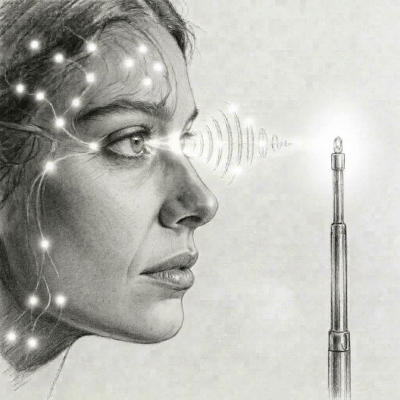
![Woman doing Brainspotting, staring at pointer, Brainspotting therapy for women in San Antonio, Texas.]()
Brainspotting
For what lives below the story, in the body, activation, and nervous-system response.
-
![sketch of woman thinking deeply, deep brain reorienting (DBR), rebecca flores, lpc, trauma therapist in san antonio, tx]()
Deep Brain Reorienting (DBR)
For shock and orienting responses that registered before words or emotions had time to form.
-
![Sketch portrait of a woman deep in thought, hypnotherapy in San Antonio, Texas.]()
Trauma -Informed Hypnotherapy
For patterns, parts, and body responses that live below ordinary conscious awareness.




Frequently Asked Questions About Attachment & Trauma Therapy
-
It's the work that goes beneath the surface of what brings you here, reaching the way your nervous system was organized early in life.
We don't just talk about your patterns. We work with where they actually live, in your body, in your relationships, and in the ways you react when something familiar gets triggered. The nervous system settles when we work with what taught it to stay on in the first place.
-
We work through the trauma your body remembers long after your mind has tried to move on. This includes unspoken early attachment wounds, childhood trauma such as emotional neglect, inconsistent caregiving, and adoption, as well as the specific weights of sexual, relational, and religious trauma.
We also hold space for unnamed grief and complex patterns that unfold when your story has been shaped by abandonment or betrayal.
-
This work doesn't follow a rigid timeline. Many women notice a shift within a few months. Others stay longer to settle and repair deeper patterns.
The work isn't rushed and isn't meant to be indefinite. It moves at a pace that fits what you're carrying and what the work asks for.
-
I meet with women in person in San Antonio and also offer online therapy for women in San Antonio and Austin. EMDR, Deep Brain Reorienting (DBR), Brainspotting, and hypnotherapy work in both formats.
-
Depth-oriented talk therapy is part of the work. It's where we understand what you're carrying and find the right pace.
What makes this different is that we don't stop there. When the work calls for it, we move into EMDR, Brainspotting, trauma-informed hypnotherapy, and other somatic approaches, working with the nervous system and body, not just the conversation.
-
The body holds trauma, grief, and attachment wounds differently than the mind does. EMDR, Brainspotting, and somatic approaches work at the level of the nervous system, reaching what's held in sensation, activation, and physical response rather than narrative alone.
Trauma-informed hypnotherapy reaches what lives below conscious thought. Depth-oriented talk therapy supports what’s been processed and helps integrate it.